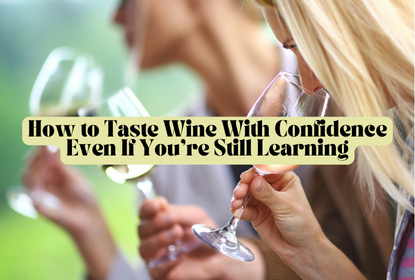
Anyone can taste wine. Tasting it with purpose, that’s the part that takes practice.
Left to your own devices, you’ll figure out pretty quickly whether you like a wine. What’s harder is explaining why. A guided tasting (aka wine class) gives you a framework: what’s actually in the glass, how it got made that way, and what makes it worth noticing in the first place. Over time, that structure builds real confidence, not just “I liked it” confidence, but “I know why I liked it” confidence.
It teaches you what to actually look for
Most people start and stop at “do I like this?” Fair enough, that’s a real question. But a good instructor pushes you further: What does the color tell you? Which aromas jump out first? Is the acid low, medium, or high? How much grip is there from the tannin? Does it feel light on your tongue or does it coat it?
None of this is complicated once someone shows you what to pay attention to. It just doesn’t happen automatically. Give it a few sessions and you’ll stop just deciding whether you like a wine and start noticing why it’s built the way it is.
It gives you words for what you’re noticing
This is the thing almost every new student runs into: you can smell something distinct and have absolutely no idea what to call it. Or you know two wines taste different and can’t say how.
Wine classes and guided tastings close that gap. Your instructor connects what’s in your glass to the vocabulary wine people actually use: citrus, stone fruit, red fruit vs. black fruit, floral, spice, oak, earth…it’s learning the language of wine.
Comparison does more than description ever will
You can read all day that Sancerre has high acidity. It won’t land the way it does when you taste it next to an oaked California Chardonnay and feel your mouth actually water differently. Same goes for tannin, body, sweetness, oak.
A few pairings that tend to make the lightbulb go on:
- Cool-climate vs. warm-climate wines
- Oaked vs. unoaked Chardonnay
- Cabernet Sauvignon vs. Merlot
- Old World vs. New World styles of the same grape
- A young wine next to one with real bottle age
Once you’ve felt a characteristic side-by-side like that, you’ll recognize it again on its own — which is really the whole point.
You find out if you’re right, on the spot
Tasting alone, you’re guessing in a vacuum. In a group, you get to test your read against everyone else’s in real time.
Maybe you called it lemon and the person next to you said grapefruit. That’s not a disagreement, as you’re both circling the same citrus profile from different angles. A good instructor can tell you which reads are reasonable, which detail actually matters most in that wine, and where personal taste stops and technical assessment starts. That kind of feedback is what keeps “I’m not sure” from turning into “I give up.”
The glass makes more sense once you know how it got there
A guided tasting isn’t just flavor-spotting — it’s also why. Climate, grape, ripeness, fermentation choices, oak, aging, regional habit: all of it shows up in the glass, and once someone connects the dots for you, the facts stop being random.
High acid clicks once you know the grapes grew somewhere cool. Vanilla and toast make sense the moment you understand what oak aging actually does. Riper, jammier fruit stops being a mystery once you picture the heat the grapes sat in. You’re not memorizing trivia anymore; you’re learning cause and effect.
Other people’s palates teach you things your own can’t
Wine tasting feels personal, but it’s better as a group sport. Someone else will smell something you completely missed, and hearing them name it is often the fastest way to learn to notice it yourself.
It’s also reassuring to watch experienced tasters describe the same wine slightly differently and still both be right, as long as what they’re saying is actually supported by the glass. Takes the pressure off.
Confidence builds faster than you’d think
Plenty of people are convinced they don’t have “the palate” for this. They do. Tasting is a skill with attention, repetition, comparison, and a guided setting will give you all three at once.
Every tasting adds a new reference point. Eventually you’re not just recognizing patterns, you’re asking sharper questions and actually trusting your own nose. That confidence follows you out of the classroom and into a restaurant wine list, a shop aisle, an exam, or just a Tuesday night bottle with friends.
Learning about wine doesn’t take the fun out of drinking wine. It just adds a second layer on top. You still get the flavor, the story, the company, but now you’re also walking away with something you can use next time.
At Capital Wine School, that’s the whole idea: structured, welcoming tastings and classes led by people who know their wine, and know how to teach it. Whether you’re just curious or working toward a serious credential, reading about wine only gets you so far. At some point, you have to taste it.